Athene 1
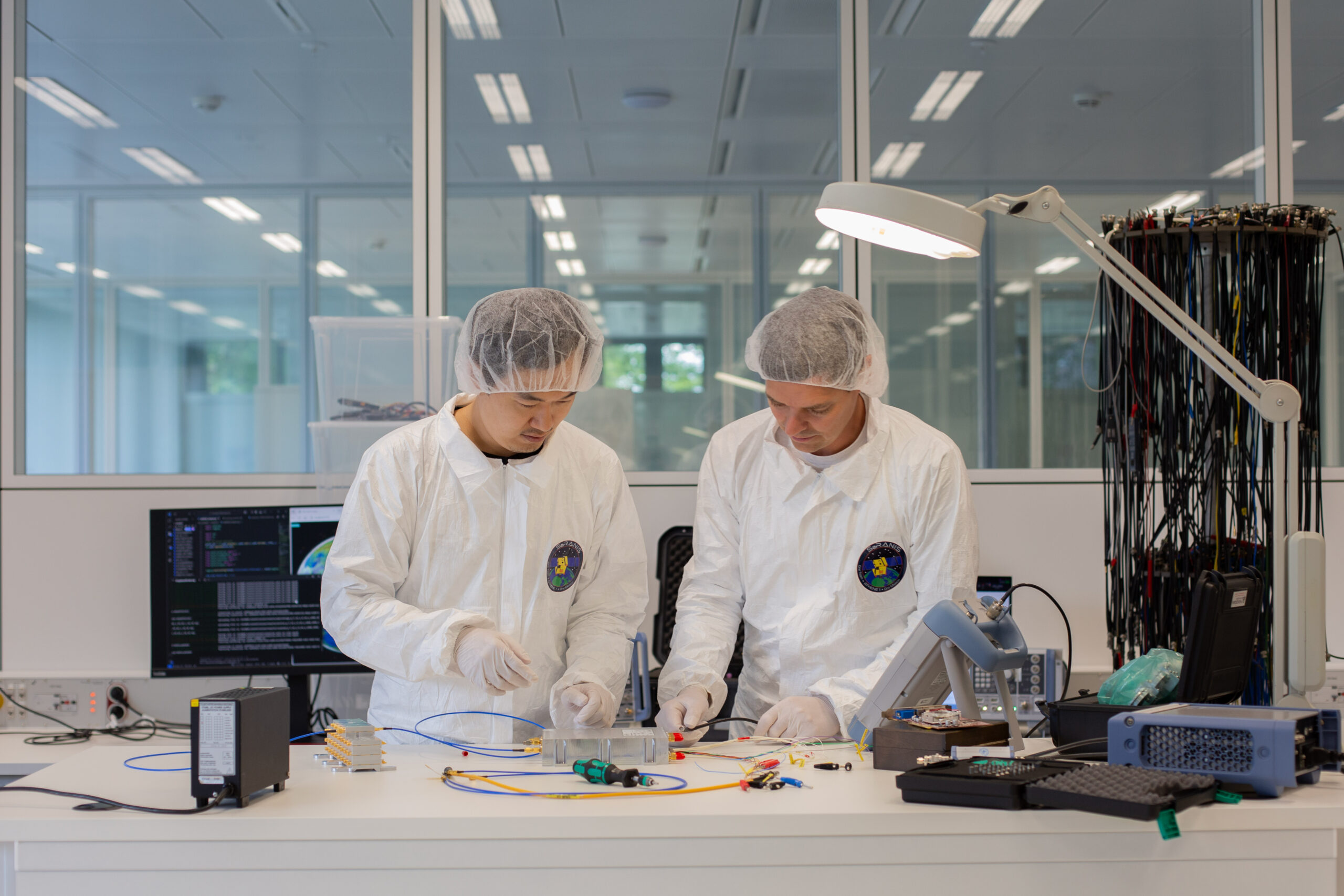
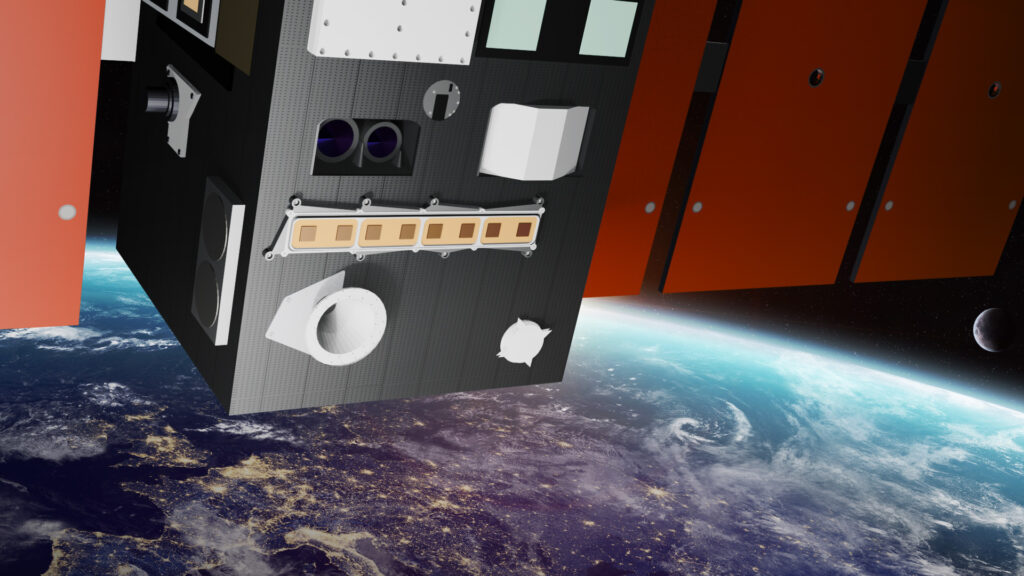
As part of the SeRANIS project, the satellite Athene 1 will serve as a publicly accessible, multifunctional experimental laboratory in orbit.
Platform
~ 300 Kg
Payload
~ 90 Kg
Altitude
Low Earth Orbit (LEO)
Launch
2026
Seamless Radio Access Networks for Internet of Space is the first and only small satellite mission in the world to provide a publicly accessible multifunctional experimental laboratory in orbit.
On the Athene 1, innovative and complex experiments are being carried out at the same time with key and future technologies. These technologies include sixth-generation (6G) mobile communications systems, laser communication, Internet of Things (IoT), to name just a few – pioneering work at its best! The platform is thus very different from the considerably smaller “CubeSats” used in other research projects, which serve as technological showpieces for individual experiments.
With this top-level dtec.bw research project, we expand our national and international leadership in the field of science. The creation of an interdisciplinary Space Innovation Hub forms the interface between science, industry, the Bundeswehr, and society because the platform is mainly intended as a demonstrator for interested users who wish to learn about the possible uses and performance characteristics of new technologies. In its capacity as the Bundeswehr’s first small satellite mission under the direction of a university, SeRANIS assumes an important role in the age of New Space Economy. In keeping with the dual-use principle, we give something back to society and place great emphasis on contributing to digitalization. Our aim, therefore, is to examine and demonstrate the benefits for society as well as the technological maturity of space-based key technologies.
Exploring secure communication channels and creating seamless transitions between different networks are the main foci of our New Space Mission. By establishing a 6G research hub, SeRANIS incorporates the space component in the 6G area, which is actually a unique feature of the project. SeRANIS seeks to participate in the emerging market of commercial space technologies and facilitate access to them. The project thus pursues an agile New Space Strategy in order to transport new systems into orbit speedily and cost-effectively.
Apart from promoting young scientists in a targeted fashion, SeRANIS aims to benefit the German space industry as well as innovative New Space start-ups. Thanks to open platform interfaces, new technologies can be tested jointly and demonstrated to relevant stakeholders.
The promotion of spin-offs and the systematic involvement of businesses are intended to help transform research into marketable products. As a result, the industry’s leading market position can be strengthened. Furthermore, SeRANIS makes an important contribution to Germany’s technological sovereignty and high-tech strategy.
Research focus of the project
6G Research Hub
A new mobile phone generation emerges every 10 years.
With every generation, the maximum data rates usually doubles.
With the leap from 5G to 6G, however, the data rate is expected to increase by a factor of 100. The sixth generation (6G) is now expected for 2030. With 5G, the focus was on implementing networks with the shortest possible delay (latency) for industry. With 6G, on the other hand, global network coverage will have an even more significant role. A mainstay of 6G will therefore probably be constellations of small satellites in low earth orbit to be able to communicate with each other even when terrestrial networks are not available. Other technologies that can develop their full potential through use in 6G are Joint Communication and Sensing, Machine Learning and Artificial Intelligence, and Quantum Communication strial networks are unavailable.
As part of the 6G research field, a terrestrial mobile radio network is being set up for research purposes on the campus of the Universität der Bundeswehr München. In the process, the end devices will be able to communicate with each other via the SeRANIS satellite ATHENE1. The network will be expanded in three phases over the entire campus. The university campus is particularly suitable because of the realistic building structure. Thus, there are areas with urban development and with rural characteristics on the site. This enables particularly realistic measurements.
The campus also has a research ground station for satellite communication that is unique in Europe. In the course of the SeRANIS project, this will be equipped with a laser communication terminal which, in combination with the ATHENE1 satellite, will then extend the test mobile communication network into space. The satellite itself will act either as a relay station in space or directly as a base station. Within the framework of the small satellite mission, parts of the future mobile radio protocols will be operated in space for the first time, bringing the “flying cell tower” in space a little closer to reality.
CORE OBJECTIVES AND UNIQUE FEATURE
Our goal is to realise a satellite payload that is as flexible as possible in order to be able to operate and research various mobile radio protocols directly on the satellite. To allow software updates for our 6G on-board base station during the mission, a flexible FPGA (Field Programmable Gate Array, a specially programmable integrated circuit) and processor architecture will be used. By interacting with the terrestrial cellular network on the ground, we have a unique infrastructure to conduct experiments for 6G research.
As a lighthouse project in the field of 6G satellite integration, we enable a unique test and experiment environment in interaction with our national and European research partners to significantly influence the standardisation towards 6G. In particular, the feasibility and operability of a 6G on-board base station for LEO (Low Earth Orbit) satellites will be demonstrated.
WHAT DO WE AIM TO ACHIEVE?
The ATHENE1 satellite will serve as a technology platform for the evaluation of satellite-based 6G services and enable us to demonstrate extensive communication experiments in interaction with the terrestrial mobile radio network.
In this way, we want to make a contribution to future mobile radio standardisation, taking LEO satellites into account. At this point, especially governmental use cases for 6G networks play a major role.
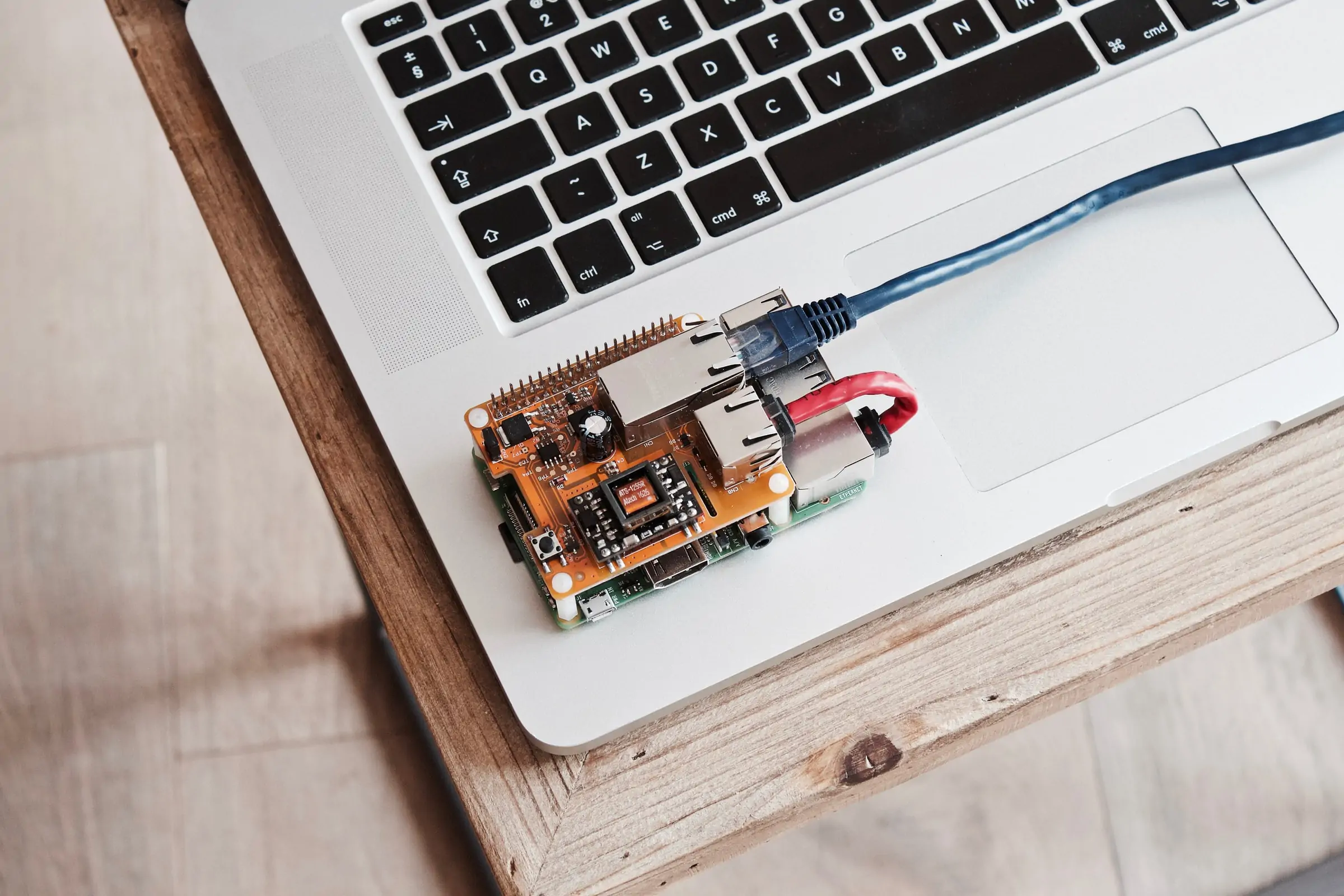
Internet of Things (IoT)
In recent years, the Internet of Things (IoT) has undergone a revolutionary transformation
aimed at connecting almost every physical device with a communication network.
As part of the IoT research area, a test environment is being created for the use of miniaturized transmitter and receiver devices that can communicate directly with a satellite. Our aim is to show that our technology, which already works in Geostationary Earth Orbit (GEO), can also work in Low Earth Orbit (LEO). The SeRANIS satellite ATHENE1 will be able to communicate with tiny battery-operated devices on earth. Such devices can transmit small data packages with emergency messages, sensor values, positions or other information.
CORE OBJECTIVES AND UNIQUE FEATURE
One of our objectives is to create the smallest possible innovative sensor approximately the size of a watch that can be read worldwide via the satellite. To this end, we want to develop, test, verify and compare transmission technologies (including waveforms, algorithms and protocols) in the IoT. These technologies will be more efficient, robust and secure than the status quo.
We also want to be in a position to use existing satellites to test the robustness and safety of IoT systems that are available on the market. In doing so, we will be looking at the systems’ hardware and transmission technology. In particular, we hope to prove their operability, feasibility, efficiency and safety for LEO satellites in real conditions.
WHAT DO WE AIM TO ACHIEVE?
The ATHENE1 satellite will serve as a test platform for satellite-based IoT services and make it possible to test and verify the technology of the UniBw and that of our cooperation partners. We will help to ensure that the Bundeswehr is always aware of the newest, most secure and most efficient “new space” communication technology and is able to use it.
We provide a research environment in space and on earth that makes it possible to conduct top-level research with university partners as well as applied research with industrial partners and the Bundeswehr. Not least, the project offers our students an excellent learning environment.
The scientific staff of the IoT Lab has been working in the field of IoT and satellite systems for many years. The team has extensive and in-depth experience in satellite channel characterization, antenna design, synchronization, coding, and hardware development.
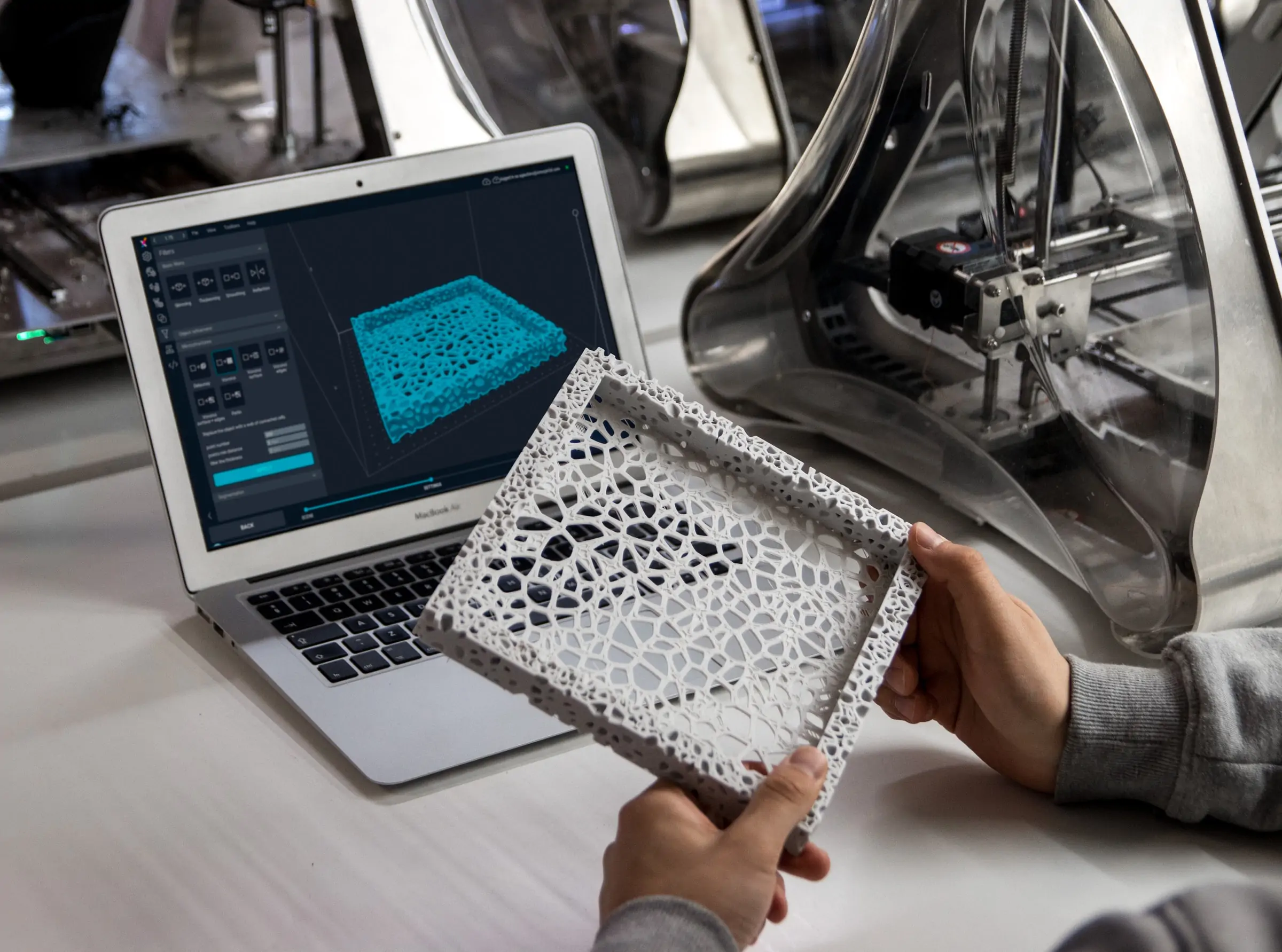
Modern satellite structures
Space missions have always been the driver of innovation in the development of new
technologies due to the exceptionally high requirements placed by the conditions in space.
These are the result of radiation influences, high variations in temperature, and the risk of collisions with meteoroids or space debris. Global commercialization of space (New Space) involves additional challenges such as high development speeds and the demand for lower costs.
Suitable experiments are being developed for the SeRANIS satellite ATHENE1 and verified in orbit. Due to their high technological maturity level at the end of the mission and having been tested in space, the technologies will be available for application in future missions.
Lightweight designs, materials and resilience are key research topics in modern satellite structures. As part of our development and testing efforts in the research field, a substantial contribution to the further progress of spacecraft structures shall be achieved:
- Integration of mechanical metamaterials and active control concepts into optical benches for high-performance instruments
- Additive manufacturing for space technology applications
- Structural Event Monitoring System (SEM) for in-orbit detection of singular events (collisions with micrometeoroids and space debris)
- New approaches for shielding space radiation by integrating functional layers into load-bearing satellite structures
- Integration of functional layers in a linerless, carbon-fibre-reinforced fuel tank to guarantee that the structure is leak-proof and burns up completely on re-entering the earth’s atmosphere
Mechanical metamaterials have a specially designed mesostructure with which specific required macroscopic material properties (e.g. heat expansion or heat conductivity) can be created. In this way, materials can also be functionalized (smart structures), thus enabling structural actuators and control concepts to be implemented.
As part of the SeRANIS mission, both approaches – mechanical metamaterials and structural control concepts – will be combined in order to enhance the performance of space technology optical benches.
Attempts to develop additive manufacturing technologies to produce metallic multi-material structures have only been undertaken in recent years, which means that they have only become established in a few laboratories throughout the world. The production of metamaterials with negative heat expansion coefficients represents a technical breakthrough.
CORE OBJECTIVES AND UNIQUE FEATURE
The purpose of the Structural Event Monitoring System is to test new algorithms that make it possible to detect events such as collisions with micrometeoroids. The algorithms work on the basis of vibration data that are measured by means of different types of sensors. Analysis of the data makes it possible to assess the structural integrity of the platform while it is in orbit. As part of cooperation with other research establishments, measurement data is provided in order to actively accelerate the development work carried out on health monitoring systems of space flight structures on the basis of the SeRANIS mission.
The main goal of the radiation protection experiment is improved shielding of harmful space radiation so as to provide better protection for the electronic components. The new shielding material in combination with the mission profile also has the advantage that it will in future be possible to use lighter satellite structures and economical and more powerful COTS hardware.
The aim of developing the linerless carbon-fiber-reinforced satellite fuel tank is to save weight and to achieve a higher level of volumetric efficiency by doing without the conventional metallic liner. A further objective is to ensure that the entire structure of the tank is able to burn up completely when re-entering the earth’s atmosphere.

Navigation
In the field of Navigation, the SeRANIS team deals with the monitoring of deliberate disruption of the
GPS or GNSS signal reception on the Earth’s surface.
In order to be able to counter this problem in future, a customized nadir-oriented antenna for receiving signals in L band and a signal recording unit are being developed and installed in the SeRANIS satellite.
Special requirements are also placed on the necessary complex analysis software which is done in post-processing on the ground with dedicated software tools. This software has to be highly sensitive so that it can detect even very low-powered ground-based interference sources. The analysis software will also be able to geo-localize the emitters by means of using frequency-of-arrival and time-of-arrival measurements of the receiving signal at the satellite.
The payload is being developed in close cooperation with other laboratory units because there are many synergies with the GNSS reflectometry and with other satellite communication experiments. As soon as ATHENE1 is in space, we will be testing the satellite together with the software by deliberately inducing GNSS signal interferences from the Universität der Bundeswehr München campus.
CORE OBJECTIVES AND UNIQUE FEATURE
In addition to developing the hardware, we aim to implement innovative software with the abovementioned requirements. We are tackling the complex task of synchronizing the many individual elements and proving the technology’s ability to function in orbit.
In contrast to radio monitoring on earth, a satellite mission is ideal for globally searching very large areas for interference. Since it is possible with SeRANIS to establish a broadband connection to the earth, the interference signal structure can be analyzed in detail using very sensitive and complex algorithms.
We will be in a position to detect and geo-localize the weakest interferences. Furthermore, we will comprehensively study the kind of interference by analyzing their signal structure.
WHAT DO WE AIM TO ACHIEVE?
Nowadays, the use of GNSS is essential for many applications. Beginning with navigation in the smartphone, the accurate time synchronization of mobile base stations and provisioning of absolute position, velocity and time information for autonomous driving applications to name only a few.
What is more, the unstable geopolitical situation in which we find ourselves at present means that GNSS signal interference is on the increase. With our mission, we want to give society as well as the Bundeswehr more insight into the spatial distribution of GNSS interferences.

Information security
Until recently, communication satellites have offered minimal flexibility in resource allocation.
Upcoming systems, however, will have to cope in real time with spatiotemporal variations of the traffic demands and more stringent security requirements.
In this context, active antennas – known as phased array antennas – will play a major role by making it easier to reallocate power and frequency resources in desired regions on earth via beamforming. Active beamforming is also a key functionality for information-secure satellite systems that ensures that interference and weak interception performance can be avoided. This paradigm shift brings significant design challenges in terms of hardware complexity and power management onboard the satellite payloads.
Even though advances in the domain of digital onboard processors have recently been achieved, power consumption issues do not allow the use of fully digital beamforming for active satellite antennas. For this reason, intensive research efforts have recently been done in the domain of hybrid (analogue/digital) beamforming, which allows for finding a trade-off between the power consumption of the onboard processor and the complexity of the analogue hardware. The hybrid beamforming experiment planned in the SeRANIS project will pave the way for this key technology to continue maturing.
CORE OBJECTIVES AND UNIQUE FEATURE
The aim of the hybrid beamforming experiment is to identify an optimal trade-off between beamforming performance and onboard power consumption. In this way the feasibility of the hybrid beamforming technology for highly flexible satellite systems with limited power and processing resources will be thoroughly investigated.
Our objective is to design a Ka-band hybrid phased array antenna that is able to generate two spatially separated beams both in the transmitting and in the receiving direction. SeRANIS offers a unique possibility to test the hybrid beamforming technology for the first time in the harsh environment of space. At the end of the project, our research team will be able to formulate recommendations on the most promising hybrid beamforming solutions. These recommendations will be based on the results of measurement campaigns conducted during the satellite’s lifetime.
WHAT DO WE AIM TO ACHIEVE?
The expertise acquired during the project will constitute a strong asset to develop future civil and military satellite systems. Cooperation with industrial partners in the context of payload development will pave the way for technology transfer and favor the market introduction of new products for advanced digital satellite systems.
Moreover, the project also promotes the training of young researchers, which is of crucial importance to maintaining a competitive European research ecosystem.

Earth observation
In addition to navigation, the signals from global navigation satellite systems (GNSS)
can also be used to study the Earth’s atmosphere and surface, among other things.
To do so, throughout a reflectometry experiment, a portion of the signals from the GNSS satellites are reflected off the Earth’s surface and can be recorded by a receiver on a drone, aircraft, or spacecraft. By analyzing the reflected and direct signal, conclusions can be drawn about the geophysical properties of the Earth’s surface.
Another possibility to use the continuously transmitted and freely available signals of the GNSS satellites is the so-called occultation measurement. Here, a GNSS satellite disappears on the horizon as seen from the receiver, and in the process, the navigation signal passes through the Earth’s atmosphere. From the doubling shift of the signal as a function of time, profiles of the diffraction angle and the refractivity, respectively, pressure and temperature of the atmosphere can be determined.
CORE OBJECTIVES AND UNIQUE FEATURE
Both occultation and reflectometry measurements require a stable reference source since very small changes in phase or frequency must be measured. New developments in oscillator technology make it possible to provide new-space oscillators with small dimensions, low weight and low power consumption. Therefore, an ultra-stable new-space oscillator will be tested and characterized for the SeRANIS satellite ATHENE1, which meets the frequency stability requirements for GNSS-ROX.
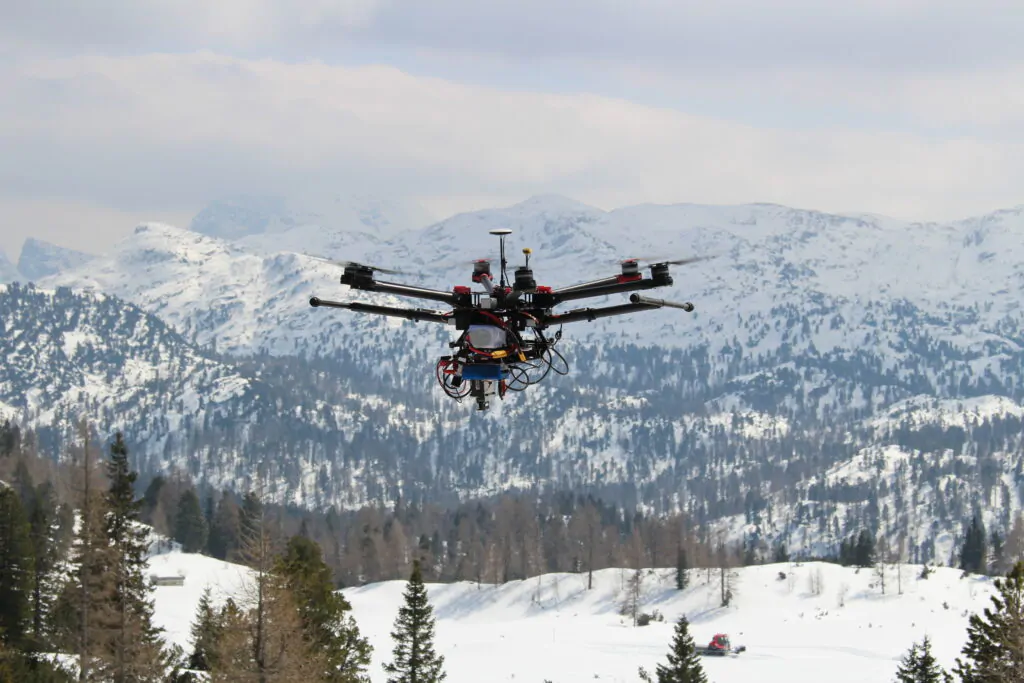
In addition, a test environment will be set up in the laboratory where new methods and algorithms for the evaluation of GNSS-ROX measurements can be developed and tested. Reflectometry measurements will also be performed using a downscaled model version of the GNSS-ROX experiment payload on a quadrocopter to test the developed algorithms of the simulation/planning software package and data analysis software.
The GNSS-ROX experiment is part of the Radioscience (RS) research group at the Institute of Astronautics at the Universität der Bundeswehr München (University of the German Armed Forces in Munich). The RS group has been and is involved in Radio Science experiments on several interplanetary space missions such as Venus Express (VeRA), Mars Express (MaRS), Rosetta (RSI), LUCY (REX), and JUICE (3GM). The knowledge and developments from GNSS-ROX will thus also find their application in future interplanetary missions.
PARTICIPATING INSTITUTES AND CONTACT
Institute for Electrical Energy Systems and Information Technology
Institute for Space Technology
Institute for Satellite Navigation
Institute of High-Frequency Technology and Circuit Design
Dr. Tom Andert | Adonees Semaan | Mohd Bilal
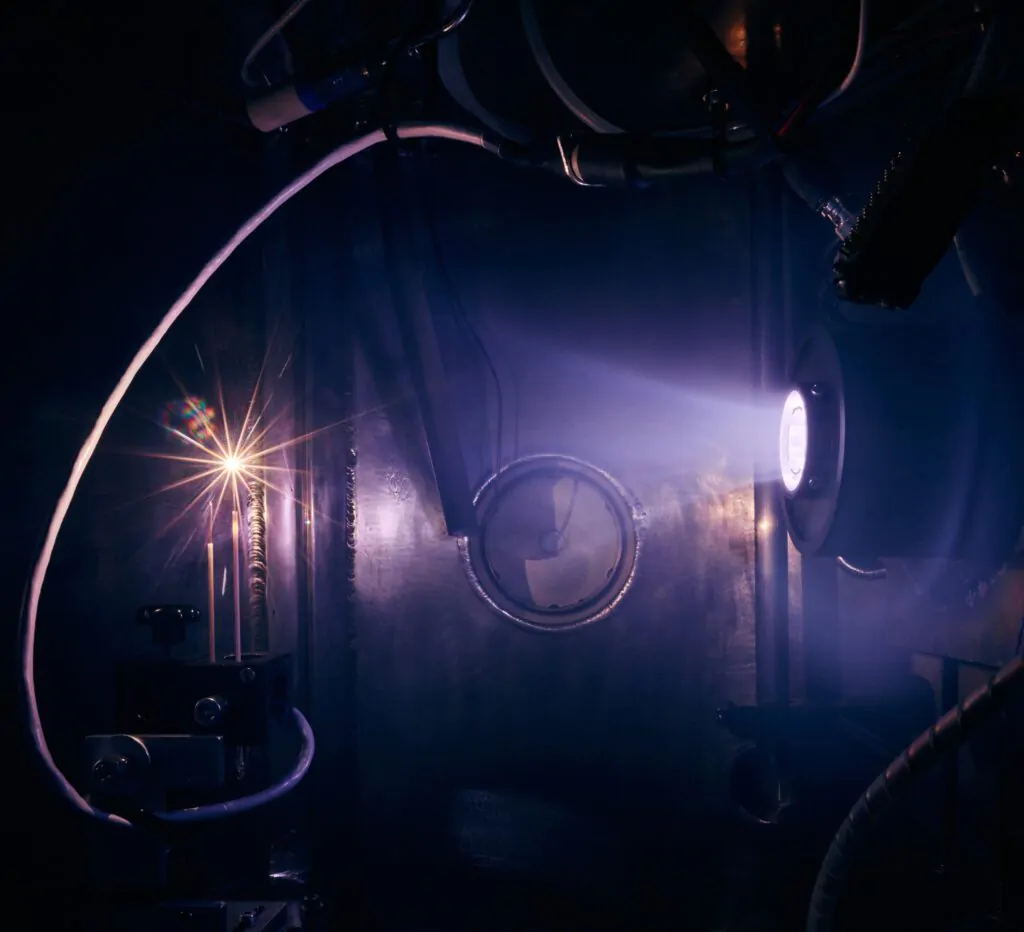
Electric propulsion systems
The optimization and technical implementation of space missions are fundamental starting points for
future satellite missions and represent an essential milestone for the aerospace industry.
Due to the high complexity of satellites and their deployment in a difficult environment without maintenance capability or other direct intervention from the ground, various challenges must be investigated, considering the latest technological developments. Thus, an important research topic in the field of mission optimization is the question of how space missions can be designed and technically implemented in a targeted, efficient, and at the same time, highly reliable manner. Therefore, our researchers deal with more than just the classical mission and system design but here exclusively take the opportunity to investigate, develop and apply innovative solutions in all critical activities in a straightforward and practical way.
CORE OBJECTIVES AND UNIQUE FEATURE
Proper handling of unforeseen situations in the context of fault management, highly autonomous operation of payloads, and autonomous planning and execution of manoeuvres are just a few examples of goals the research team is pursuing. In space, these technical challenges are combined with “system of systems” situations, resulting in correspondingly complex solutions. It has implications for the development, verification, validation and operational processes right through to the safe and sustainable disposal of satellites after the end of the mission.
In addition to the detailed technical aspects, topics in the area of complexity management as well as the entire life cycle of satellites, such as verification and validation of AI-based software, the extension of service life (in-orbit servicing, in-orbit recycling, etc.) or safe passivation after mission end, are also considered in context.
Development, testing and implementation of innovative solutions will be followed by in-orbit demonstration. Validation will be based on tests and analyses using already available modern measurement and test environments. In addition, the development and operational processes themselves will be further developed based on concepts of modern “Systems Engineering” (Uncertainty Modeling, Predictive Modeling, Visual Analytic, Virtual Testing, etc.), “Product Life Cycle Management”, “User-centered Designs” or “Agile, Concurrent and Lean Engineering”.
WHAT DO WE AIM TO ACHIEVE?
For the design and optimization of future satellite missions, the research and development results of SeRANIS are integrated into the context of New Space. They also drive the operational use of innovative solutions within the Bundeswehr.
In addition to the methods and practices of scientific research, our employees are expected to learn how to deal with highly complex systems – practice-oriented systemic thinking that cannot normally be taught in this form at any university. Thus, we make an essential contribution to training highly qualified systems engineers in the aerospace industry.
This experience enables our team members to take on responsible tasks in aerospace technology and systems engineering in the future – both in industry and start-ups, as well as in public (government) institutions, space agencies and research facilities.
PARTICIPATING INSTITUTES AND CONTACT
Institute for Plasma Technology and Mathematics
Prof. Dr.-Ing. Jochen Schein
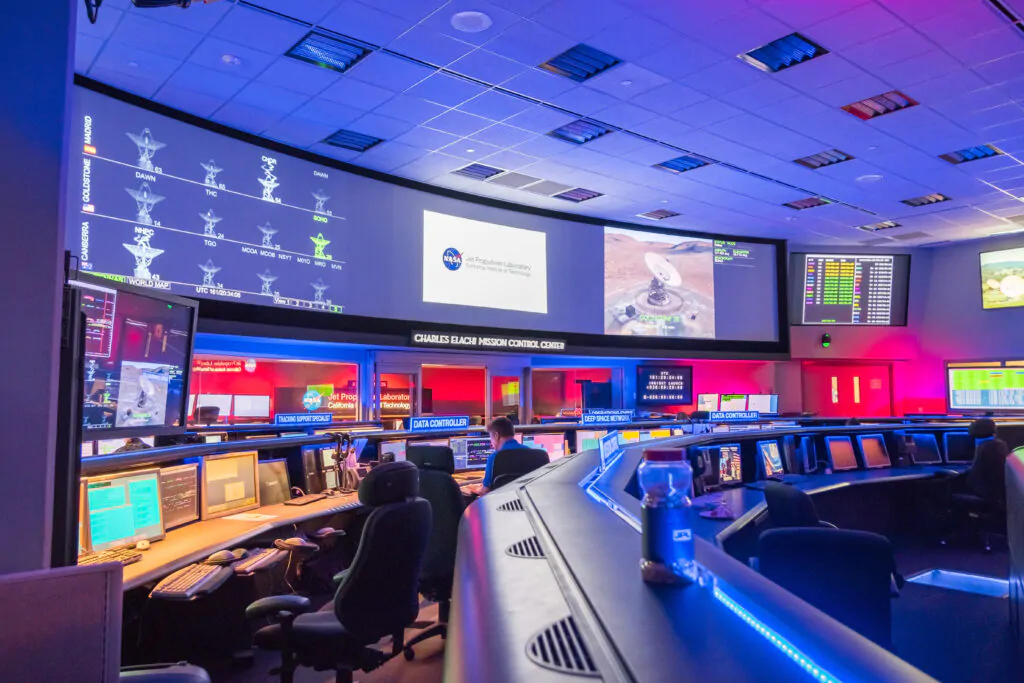
Optimization of Satellite Missions
Good communication requires precise positioning. The main research fields of the SeRANIS project deal with the communication
and transmission of data. Regardless of the technology used, the satellites need to be accurately positioned to ensure fast and efficient communication.
For such purposes, electric propulsion systems have proven effective thanks to the precise adjustment options of the generated forces and due to their high efficiency. The advantage of electric spacecraft propulsion systems in comparison to other types of drive systems is their high specific impulse, which requires minimal amounts of propellant. This makes these systems, in particular with regard to attractive for long-term missions. This gives reason to explore solutions for existing problems such as grid erosion in ion thrusters or the scalability of Hall-effect thrusters but also to develop new drive concepts.
CORE OBJECTIVES AND UNIQUE FEATURE
At the Institute for Plasma Technology and Mathematics at the Universität der Bundeswehr, two drive concepts – C-Star and HERVAT – have been designed for positioning satellites and tested under laboratory conditions. The first concept is based on a capacitively-coupled radio frequency discharge, where the charged particles of a quasi-neutral plasma are accelerated by means of magnetic fields. As a result, a C-Star drive does not require any additional components that would prevent build-up of static charge on the satellite (referred to as neutralizers). The concept is scalable and has a long life due to the absence of a cathode. In addition, a C-Star drive can work with different types of fuel, which is not only more environmentally friendly but also makes it possible to reduce running costs. The second concept (HERVAT) is a vacuum discharge system that is most notably characterized by its simple structure and, like the C-Star, does not require a neutralizer. Originally developed for microsatellites (Cube Sat), this system has been tested under laboratory conditions to carry out more than 10 million position-correcting pulses with one tiny unit.
The SeRANIS project provides a basis for exploring the concepts developed under laboratory conditions under real field conditions. In the process, both drive systems are adapted to the size of the satellite and the onboard conditions and undergo a series of qualification tests in order to obtain flight certification.
CORE OBJECTIVES AND UNIQUE FEATURE
Essentially, the purpose of the SeRANIS project is to put into practice the knowledge acquired through scientific research about the physics of electric drives. The expert knowledge acquired from the project – particularly concerning the constructive implementation and flight certification of electric spacecraft drive systems – is thus an important factor for the development of future drive concepts.
In addition, the project provides a basis for students and young researchers to gain significant experience for their ensuing military, university or industrial careers.